Domestic Mobility Infrastructure: Ranking the Best Airport Lounges for Business Travel US
best airport lounges for business travel us. Domestic corporate mobility relies heavily on efficient transit environments that enable continuous executive productivity. When frequent travelers navigate major domestic flight corridors, public terminal spaces present significant noise, crowding, and power accessibility constraints. These terminal disruptions degrade focus, compromise confidential communications, and accelerate physical fatigue across long travel itineraries.
Establishing an effective ground mobility strategy requires looking beyond surface-level lounge amenities. Treating airport lounge access as a luxury benefit overlooks its operational role as a mobile workspace infrastructure. Uncoordinated access methods, unexpected overcrowding, and fragmented terminal coverage reduce the practical business value of lounge network investments. Consequently, corporate travel managers, procurement officers, and executive travelers must systematically evaluate lounge networks to maximize productivity yields during transit.
This reference guide provides an analytical evaluation of airport lounge networks within the United States. By examining access models, terminal distribution, acoustic management, and digital connectivity, this document offers actionable insights for corporate mobility decision-makers. Organizations can apply these frameworks to transform airport layovers from lost transit hours into predictable, high-output work windows.
Understanding best airport lounges for business travel us
Multi-Perspective Operational Breakdown
Evaluating the best airport lounges for business travel us requires analyzing lounge networks through distinct financial and operational frameworks. Procurement teams assess lounge access programs based on enterprise membership costs, employee credit card synergies, and total travel return on investment. Conversely, executive travelers prioritize fast Wi-Fi speeds, quiet phone areas, comfortable seating, and convenient terminal placement.
Strategic Alignment of Ground Infrastructure
At an enterprise level, identifying optimal lounge networks involves matching corporate flight routes with available airport lounges. A distributed sales force traveling through mid-sized domestic airports requires broad independent network access. Conversely, executive teams traveling along primary hub routes benefit more from flagship airline club memberships.
Overcoming Operational Oversimplifications
Oversimplifying lounge selection creates operational friction for frequent corporate travelers. Relying on single-brand memberships often leaves travelers stranded without lounge access during connecting flights at secondary airports. Modern enterprise mobility governance establishes multi-tiered access strategies, combining primary carrier memberships with independent lounge network passes to ensure continuous coverage.
Deep Contextual Background
Historical Evolution of Domestic Airport Lounges
Historically, airport lounges were exclusive membership clubs designed primarily for high-tier frequent flyers and premium class international travelers. Early lounges provided basic seating, light refreshments, and dedicated phone lines, functioning as quiet waiting areas away from main terminal corridors.
Shift Toward Mass Premium Accessibility
The expansion of co-branded credit card programs during the 2010s altered lounge access dynamics. Card issuer networks granted lounge access to broader groups of travelers, causing significant capacity challenges across major domestic airports. Lounges transitioned from quiet rest spaces into high-density environments requiring active queue management.
Modern Productivity-Focused Infrastructure
Modern domestic lounges adapt to changing traveler needs by incorporating dedicated productivity tools into their physical layouts. Leading lounge operators prioritize high-speed Wi-Fi, soundproof call booths, ergonomic work desks, and full hot buffets. Consequently, corporate travel managers treat lounge access as an essential component of professional mobility planning.
Conceptual Frameworks and Mental Models
The Transit Productivity Yield Model
The Transit Productivity Yield Model evaluates lounge utility by measuring billable work hours completed during layovers against total membership costs. Productive lounge hours depend on acoustic isolation, reliable Wi-Fi, desktop surface space, and easy power outlet access.
Maximizing Layover Efficiency
Applying this model helps corporate travel teams justify premium lounge memberships for high-frequency travelers. Securing access to lounges with private work booths enables employees to conduct confidential client calls and complete urgent tasks during layovers.
The Network Density vs. Geographic Spread Matrix
The Network Density vs. Geographic Spread Matrix categorizes lounge operators based on destination coverage and amenity quality. Airline flagships feature high amenity quality within central hub airports but lack coverage at non-hub destinations. Independent networks offer widespread access across secondary airports, though space availability varies by location.
Balancing Hub and Regional Coverage
Recognizing these structural differences allows corporate travel planners to build balanced access portfolios. Combining legacy carrier memberships with card-based independent access ensures travelers remain supported across primary hubs and regional destinations.
The Overcrowding Resilience Index
The Overcrowding Resilience Index measures a lounge’s operational capacity to maintain a quiet, productive environment during peak travel windows. Factors enhancing resilience include digital queue management apps, strict guest access limits, spacious layouts, and reserved executive work zones.
Selecting High-Resilience Networks
Evaluating lounges using capacity metrics prevents companies from investing in networks prone to severe entry delays during peak hours. Premium card networks and elite airline lounges implement entry caps to protect space for working business travelers.
Key Categories and Structural Variations
Legacy Airline Flagship Lounges
Major U.S. legacy carriers operate flagship lounge networks at key hub airports, offering elevated dining, private work suites, shower facilities, and dedicated customer service agents.
Trade-Offs of Flagship Lounge Access
Flagship lounges offer exceptional service, dedicated rebooking help during flight delays, and high comfort levels. However, entry requires flying premium international cabins or maintaining top-tier airline status, limiting daily access for routine domestic travelers.
Traditional Airline Club Networks
Traditional carrier clubs provide widespread coverage across primary and secondary U.S. airports, featuring standard seating, work tables, light snacks, and complimentary beverages.
Value of Standard Carrier Clubs
Standard carrier clubs deliver consistent operational value for high-frequency domestic travelers. While food options are basic, these lounges offer reliable seating, functional work surfaces, and helpful gate agents during flight disruptions.
Premium Financial Institution Lounges
Credit card issuers operate proprietary lounge networks at major domestic airports, providing high-end dining, signature cocktails, and modern workstation pods.
Managing Card Lounge Congestion
Financial institution lounges provide excellent amenities and food quality across major U.S. hubs. However, high popular demand can create entry waitlists during peak morning and afternoon travel windows.
Independent Membership Lounge Networks
Independent membership networks aggregate third-party lounges, independent clubs, and airport restaurant credits into a single digital access program.
Assessing Independent Network Coverage
Independent programs deliver broad geographic coverage across mid-sized domestic and international airports. While amenity levels vary across partner locations, these networks provide valuable lounge access where major carrier clubs are absent.
Detailed Real-World Scenarios
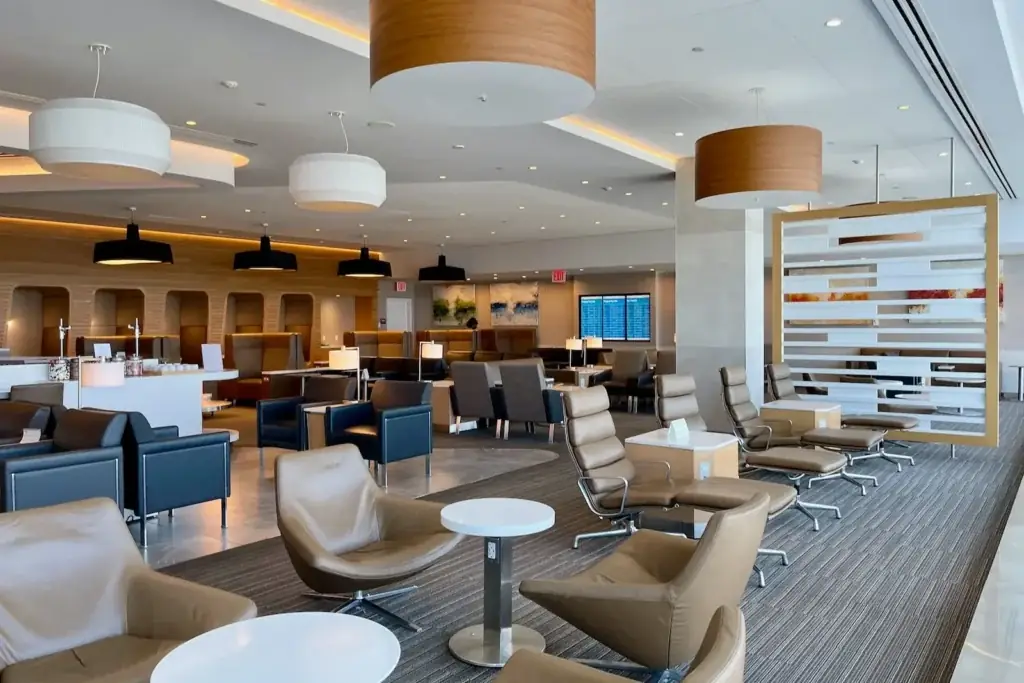
Scenario A: Multi-Leg Domestic Flight Disruption
An executive sales director encounters a two-hour flight delay at a major hub airport during severe weather, threatening an upcoming client presentation.
Navigating Hub Flight Disruptions
The director uses their carrier club membership to enter the lounge, bypassing long customer service lines in the main terminal. A dedicated lounge agent rebooks the director on an alternative flight, while soundproof phone booths allow them to present to the client on time.
Scenario B: High-Volume Regional Travel Corridor
A regional audit manager travels weekly between mid-sized airports lacking major carrier flagship lounges.
Optimizing Regional Terminal Layovers
The manager uses an independent lounge pass to access partner clubs and participating airport dining options across secondary routes. This flexible setup ensures comfortable seating and reliable Wi-Fi, even at airports without legacy carrier lounges.
Scenario C: Executive Delegation Remote Strategy Sessions
A team of four senior leaders requires a quiet workspace during a three-hour layover to finalize a corporate acquisition strategy.
Securing Confidential Meeting Spaces
The team reserves a private conference room within an airline flagship lounge using corporate membership benefits. The quiet environment allows them to review sensitive financial documents securely without risk of public exposure.
Planning, Cost, and Resource Dynamics
Direct Membership Costs vs. Productivity Gains
Evaluating lounge access programs requires balancing direct membership fees against improved traveler productivity and reduced transit stress. Direct expenses include annual club memberships, corporate card annual fees, single-day pass charges, and guest access fees. Indirect benefits include billable work hours gained, reduced food expenses, and faster flight rebooking during disruptions.
Calculating Lounge Access ROI
Providing lounge access to frequent business travelers generates clear financial returns through improved productivity and meal savings. Recovering two billable work hours per month offsets the cost of an annual club membership.
Tools, Strategies, and Support Systems
Optimizing lounge access requires utilizing digital management tools, flight tracking applications, and mobile lounge apps. Combining these systems ensures travelers navigate terminal layovers efficiently while avoiding congested lounges.
Digital Lounge Discovery Engines
Lounge discovery apps display live capacity data, operational hours, terminal locations, and entry rules across major domestic airports, helping travelers plan layovers efficiently.
App-Based Capacity and Queue Systems
Proprietary lounge apps allow travelers to join digital waitlists before arriving at the lounge door. Queuing remotely helps business travelers manage their time and avoid waiting in terminal entry lines during peak hours.
Streamlining Peak-Hour Lounge Access
Using digital waitlist apps helps travelers maximize productive working time during layovers. Employees can work comfortably at terminal gates until receiving a mobile notification that space is available in the lounge.
Flight Status and Terminal Navigators
Terminal navigation apps calculate walking times between lounges and departure gates, ensuring travelers maximize lounge work time without risking late flight arrivals.
Automated Card Benefit Integrators
Corporate travel platforms track employee credit card entitlements automatically, matching corporate card benefits with available lounge networks to streamline booking and access workflows.
Risk Landscape and Failure Modes
Lounge Network Risk Classification
Managing ground mobility programs requires monitoring access rule changes, severe terminal congestion, unexpected lounge closures, and privacy risks. Evolving access policies and crowded lounges can reduce the value of company lounge investments.
Managing Entry Congestion Disruptions
Severe lounge congestion during weather delays can leave travelers without seating or workspace. Travel programs should provide alternative transit options, such as airport hotel day passes or quiet terminal work pods, during major travel disruptions.
Adapting to Access Rule Changes
Airlines and card issuers update lounge entry requirements regularly, adjusting guest fees and elite status rules. Travel managers must review access terms annually to maintain cost-effective coverage for corporate travelers.
Mitigating Data Privacy Vulnerabilities
Working in open lounge spaces introduces risks of data interception over public Wi-Fi or visual privacy breaches on laptops. Enforcing mandatory VPN usage and privacy screens protects confidential company information during business travel.
Cascading Systemic Failure Patterns
Unmanaged lounge access issues can compound quickly, causing significant travel delays and reduced productivity.
Preventing Ground Mobility Disruptions
When travelers encounter crowded lounges without alternative options, they are forced to work in noisy main terminal areas. This compromises data security and increases travel fatigue. Providing diverse access options prevents these ground mobility breakdowns.
Governance, Maintenance, and Long-Term Adaptation
Effective lounge program governance requires periodic policy reviews, membership utilization audits, and employee feedback analysis. Static mobility guidelines become outdated quickly as carrier networks change, terminal layouts update, and corporate flight paths evolve.
Establishing Ongoing Governance Routines
Establishing structured governance routines ensures travel mobility investments deliver continuous value. Travel managers should review membership usage quarterly, removing unused lounge passes and optimizing corporate card deployments. Annual policy updates align lounge access rules with current flight patterns and company budgets.
Measurement, Tracking, and Evaluation
Evaluating airport lounge programs requires monitoring operational usage metrics alongside traveler satisfaction indicators. Relying solely on total membership costs prevents travel managers from measuring the true productivity benefits of ground support programs.
Monitoring Leading Indicators
Leading indicators offer early insights into lounge usage and traveler productivity. Tracking how often employees use lounge discovery and queue management apps measures digital tool adoption. High app usage correlates with smoother airport layovers and better time management.
Analyzing Lagging Metrics
Lagging metrics evaluate historical financial efficiency and overall program value. Tracking cost-per-visit metrics across carrier memberships and card networks highlights underutilized accounts. Comparing these metrics year-over-year helps travel managers optimize membership tiers and corporate card distributions.
Combining Qualitative and Quantitative Insights
Combining quantitative visit data with qualitative traveler feedback provides an accurate view of program health. High satisfaction scores show that lounge access rules support productivity without wasting travel funds. Conversely, low satisfaction paired with high cost-per-visit numbers indicates that current lounge policies need updating.
Common Misconceptions and Oversimplifications
Myth 1: Airport Lounges Are Purely Luxury Perks for Executives
Viewing airport lounges as luxury perks ignores their functional value as secure mobile workspaces. Providing quiet environments, reliable Wi-Fi, and power access turns idle layover time into productive billable work hours.
Myth 2: A Single Membership Network Covers All U.S. Travel Needs
No single lounge network provides complete coverage across every U.S. airport. Combining legacy carrier memberships with card-based independent access ensures travelers remain supported across major hubs and regional airports.
Myth 3: Premium Credit Cards Eliminate All Terminal Congestion
High-end credit cards provide valuable lounge access, but cardholder lounges often experience long entry waitlists during peak travel hours. Travelers should utilize digital queue tools and maintain backup access options.
Myth 4: Day Passes Are Always More Cost-Effective Than Annual Memberships
Purchasing individual day passes for frequent travelers creates higher total costs and administrative effort than securing annual memberships or corporate cards. Annual memberships deliver better long-term value for employees flying more than 15 times per year.
Ethical, Practical, and Environmental Considerations
Sustainable Terminal Transit Strategies
Integrating sustainability principles into corporate travel governance benefits environmental goals and traveler well-being. Selecting eco-friendly lounge networks and encouraging efficient routing reduces environmental impacts while maintaining high productivity.
Choice Architecture and Terminal Sustainability
Many modern lounges prioritize eco-friendly operations, including zero-waste dining, digital receipts, and energy-efficient designs. Supporting sustainable lounge partners helps organizations achieve corporate ESG goals while supporting traveling staff.
Balancing Cost Discipline with Traveler Well-Being
Ethical mobility management balances financial budget controls with genuine support for traveler health and safety. Forcing frequent business travelers to endure crowded, noisy terminals to save on lounge fees causes fatigue and reduces job performance. Well-designed travel programs invest in ground mobility infrastructure to protect employee health and sustain long-term performance.
Conclusion
Determining the best airport lounges for business travel us requires combining strategic access planning, clear budget controls, digital queue management tools, and traveler support protocols. Moving away from unmanaged lounge spending toward an integrated ground mobility strategy transforms layover downtime into a productive, low-stress component of corporate travel.
Effective ground mobility programs balance financial discipline with reliable terminal access, quiet working environments, and strong data security. Organizations that audit lounge usage regularly, update credit card access strategies, and maintain flexible coverage options protect both travel budgets and employee productivity.
Domestic corporate mobility management requires continuous refinement as airline routes, terminal infrastructures, and lounge access rules evolve. Business leaders who treat ground support networks as vital productivity tools ensure their teams remain effective, protected, and focused across all domestic travel corridors.